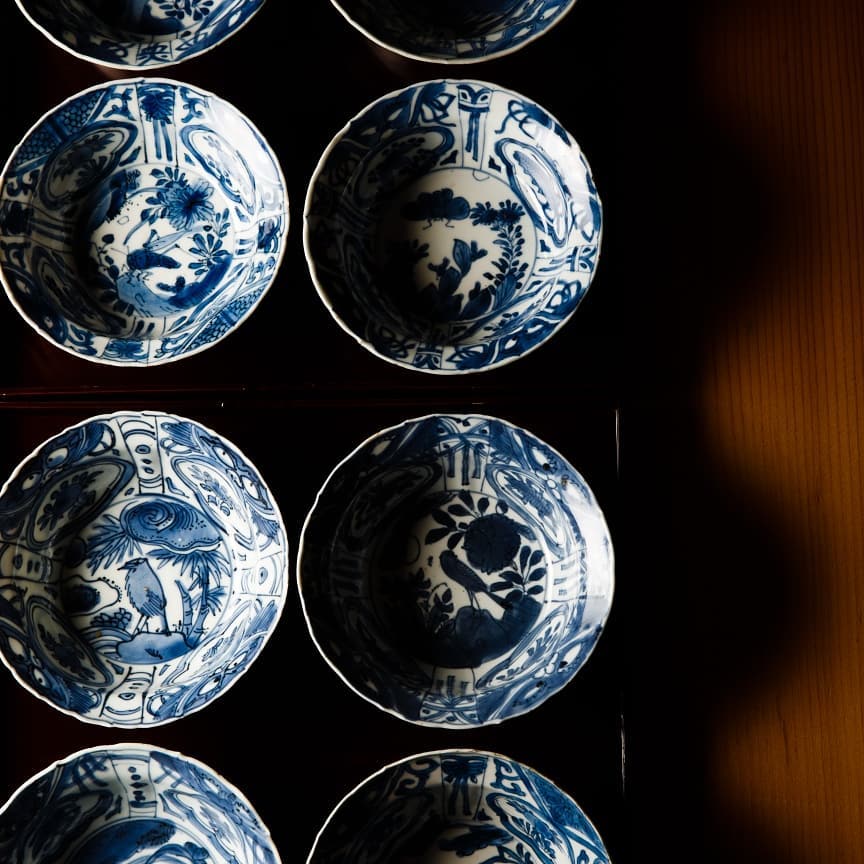
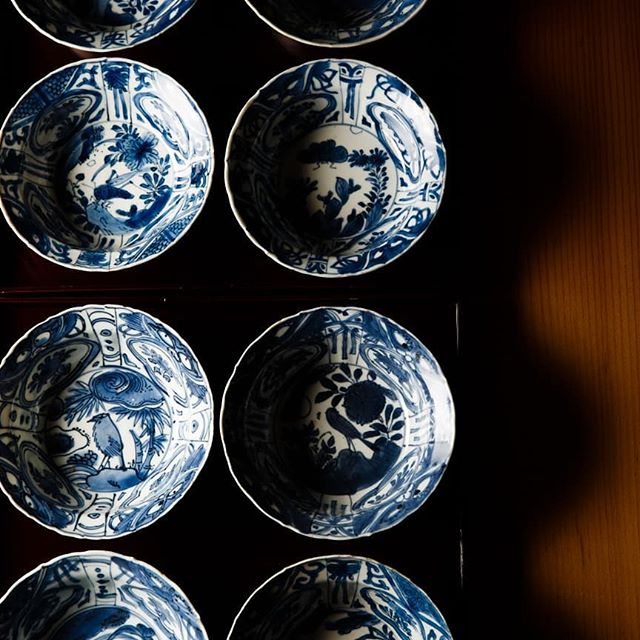
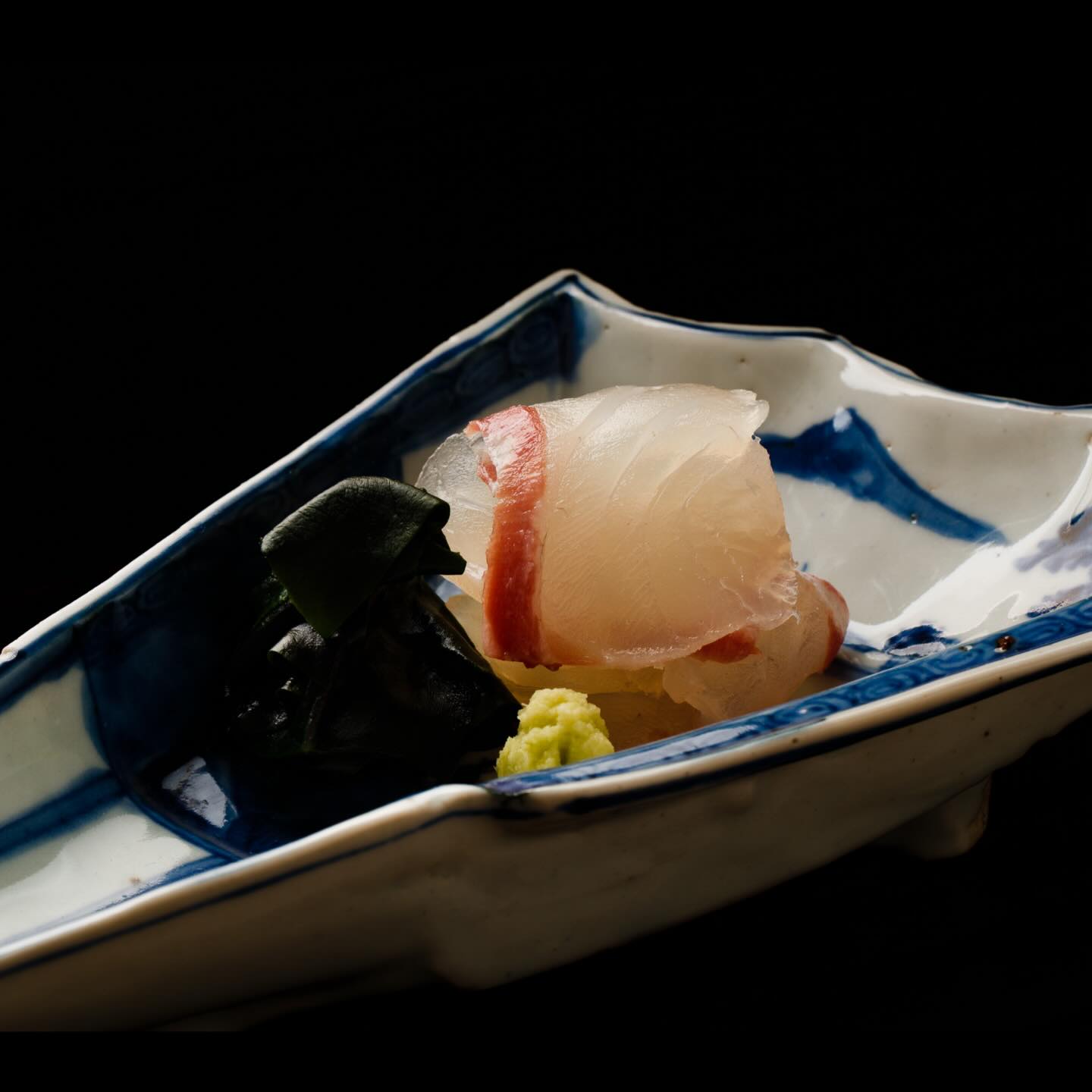
Late Ming dynasty, circa 1620–1640.
Kosome-tsuke porcelain fired in Jingdezhen, China.
At that time in Jingdezhen,
alongside wares made for the imperial court,
there were vessels specially commissioned for Japan.
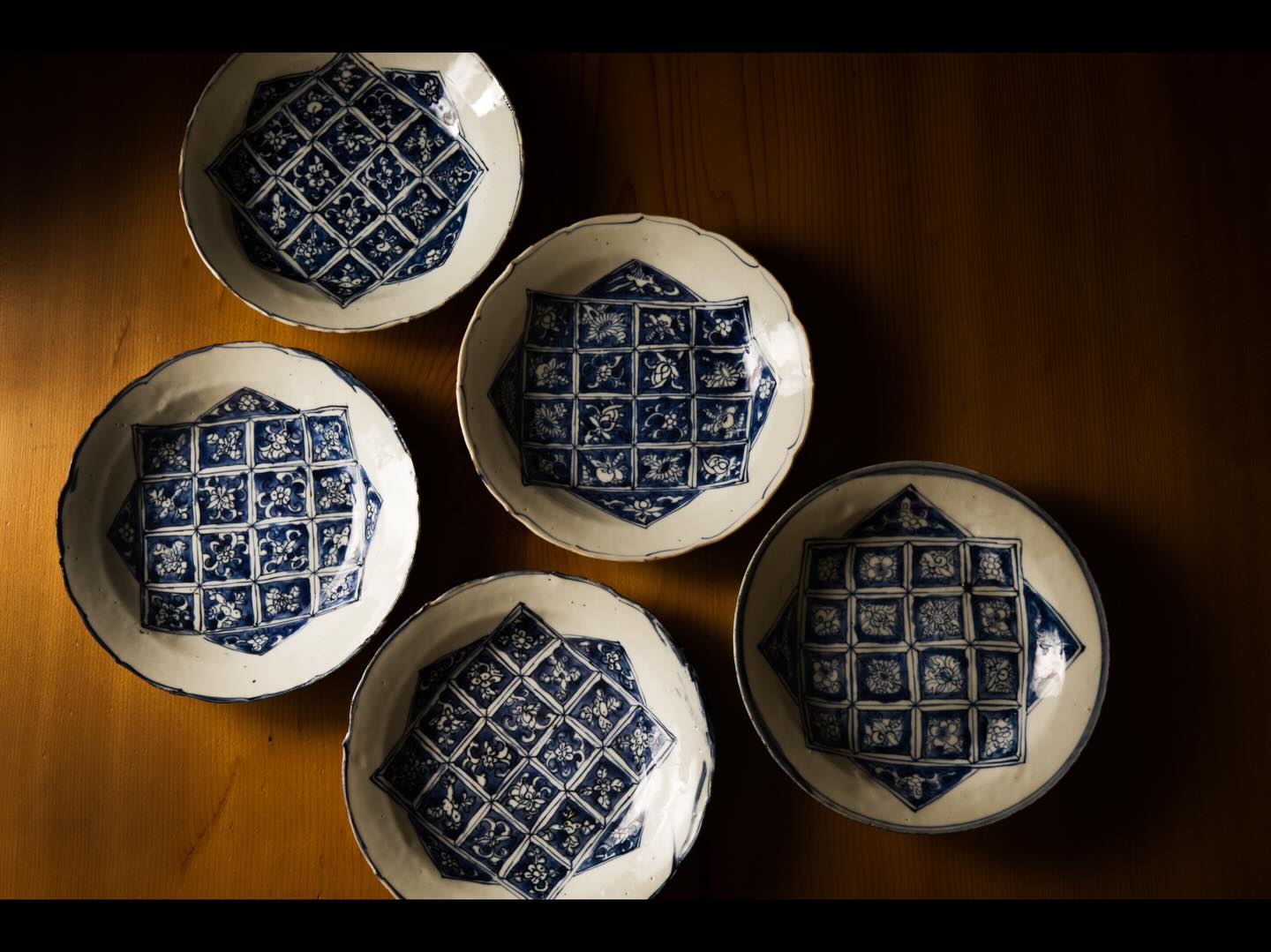
The lines are not perfectly uniform,
the brushwork free and almost improvisational.
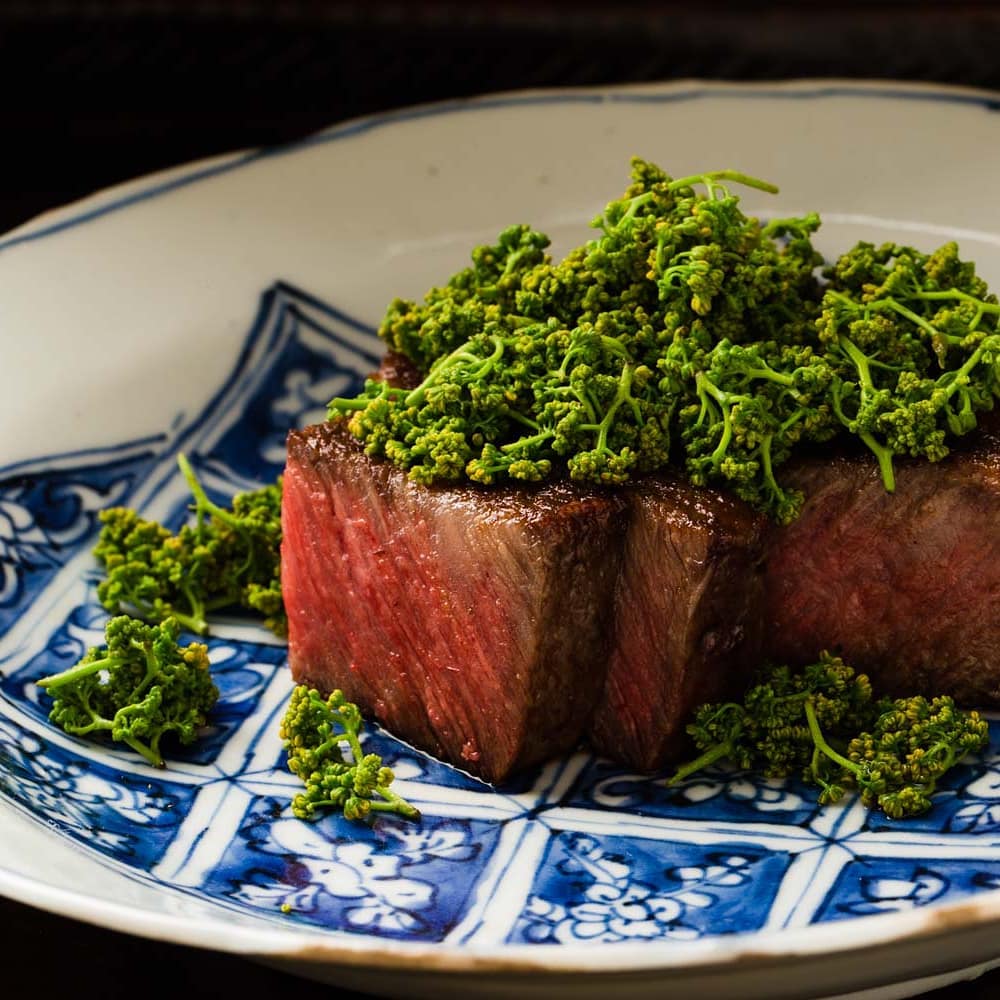
Yet each piece holds food with quiet generosity
and a deep sense of balance.
Even after four hundred years,
they remain naturally present
as vessels meant to face cuisine itself.
A dish is not completed on the plate.
It begins the moment we face the vessel.
Nearly four hundred years ago,
sometsuke porcelain was fired in Jingdezhen during the late Ming period.
Its lines and spaces, born for everyday use, remain quietly present today.
These vessels do not speak loudly.
They receive, and they support.
The surface begins to breathe —
the porcelain and the brushwork revealing themselves in time.
Not to decorate cuisine,
but to move alongside it through centuries.
The reason these vessels have endured
reveals itself in that quiet presence.