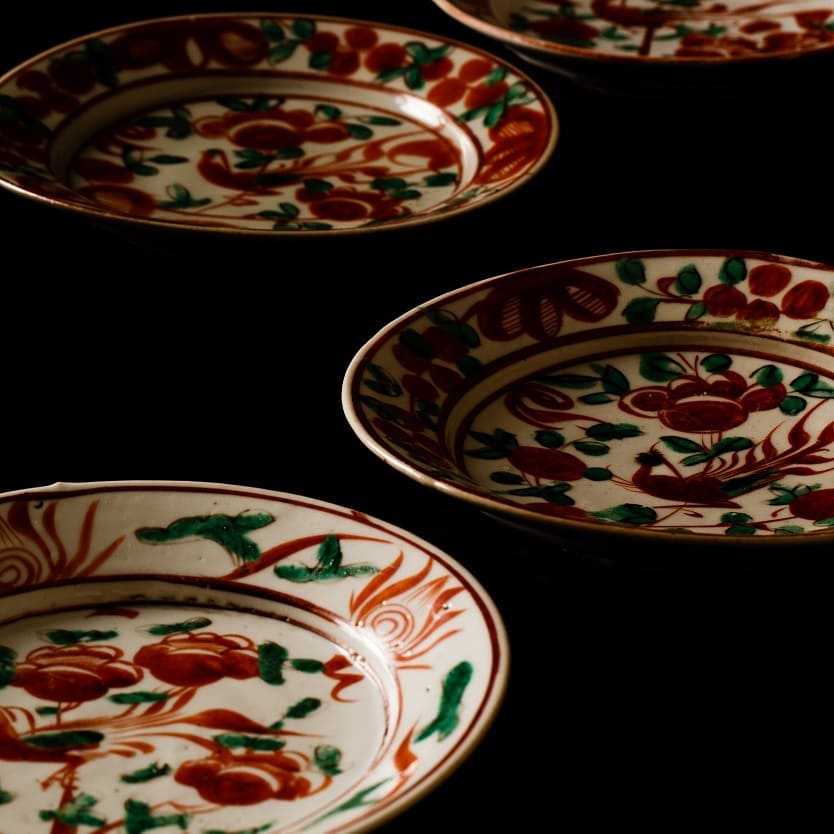
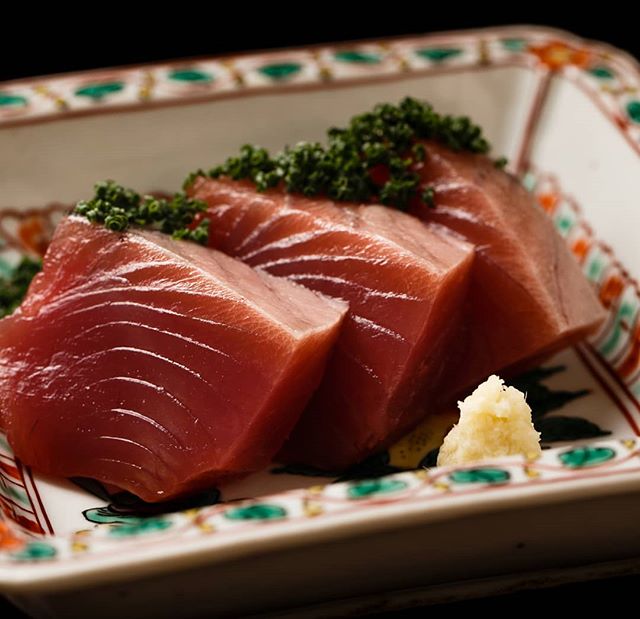
Produced in Jingdezhen
during the late Ming to early Qing period,
these vibrant polychrome porcelains crossed the sea
and became rooted in Japanese dining culture.
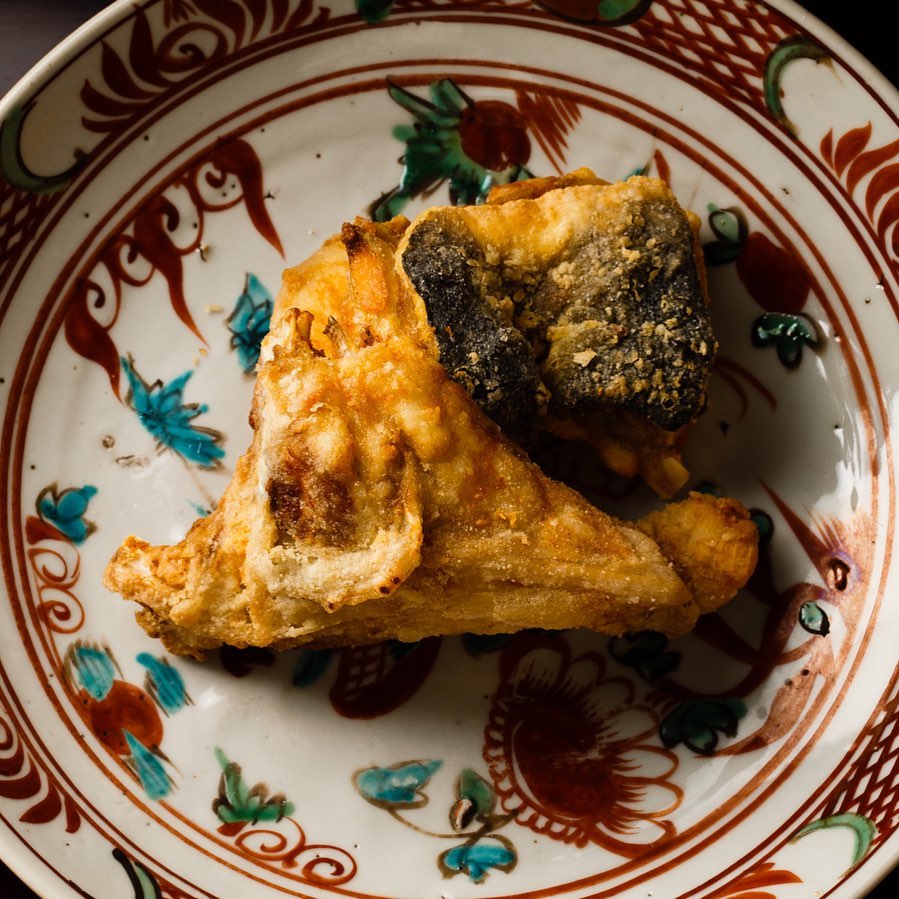
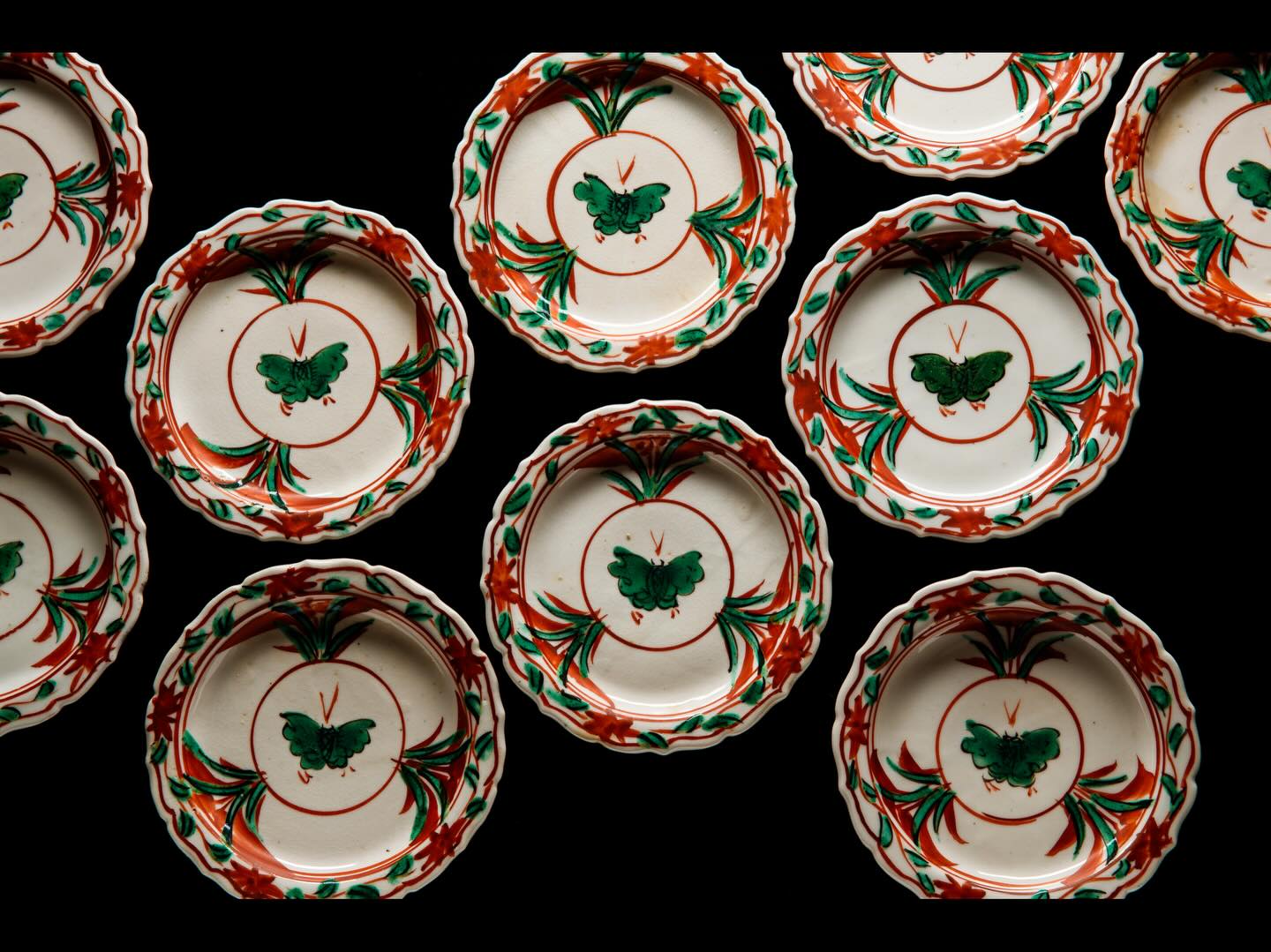
The striking contrast of vermilion and green.
A composition that feels free, yet perfectly balanced.
Its style was later reinterpreted
by many Japanese masters —
Eiraku Hozen, Wazen, Myozen,
as well as Kawase Chikushun, among others.
To create a “copy”
is not to imitate form,
but to grasp the core of its design.
The tension and playfulness of the original.
The rhythm between ornament and space.
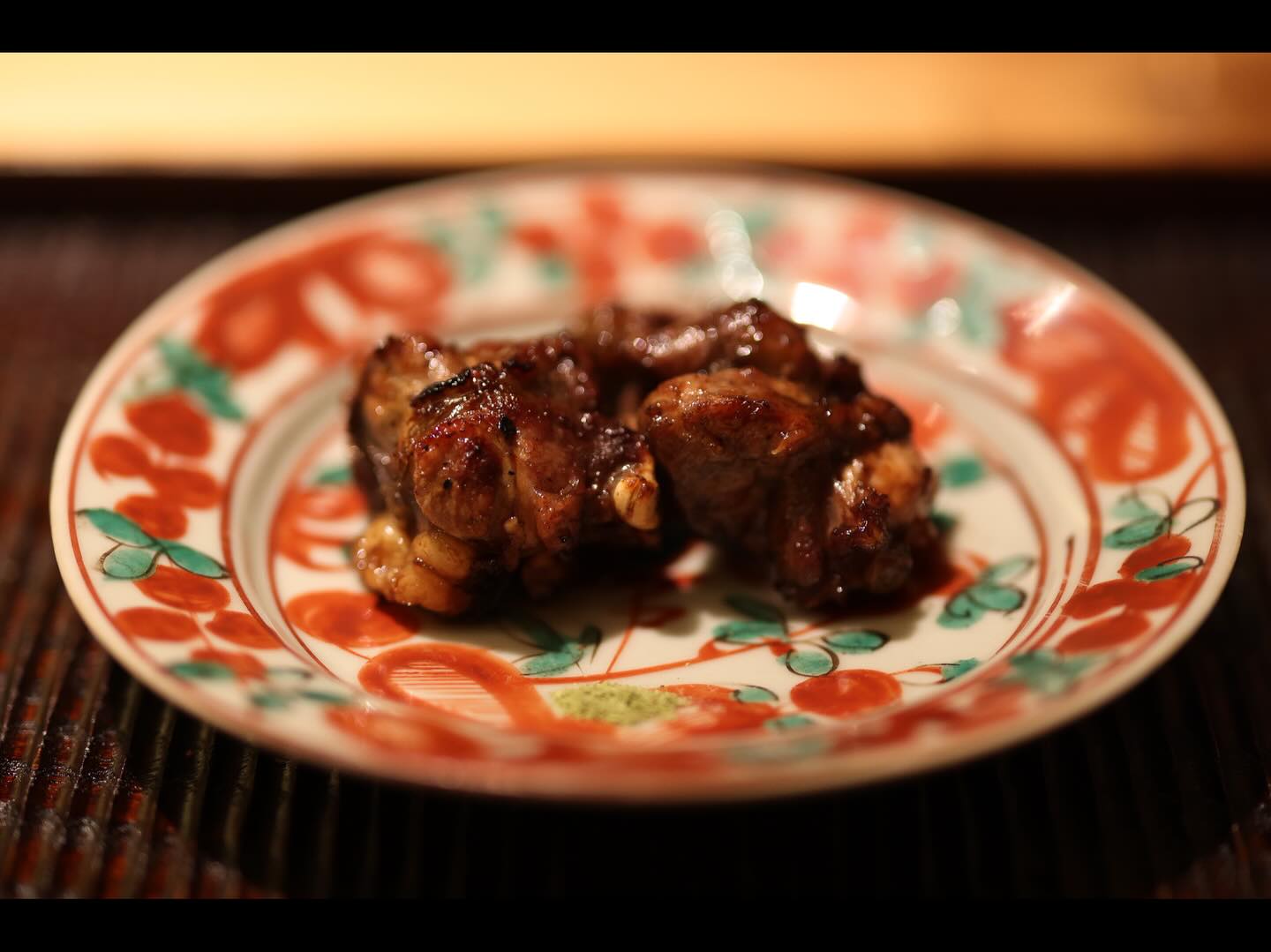
The beauty of red enamel
continues to resonate with cuisine today.
Polychrome porcelain fired in the kilns of Jingdezhen
during the late Ming to early Qing period.
Its name derives from Nanjing,
the former capital of the Ming dynasty,
and became a broad term in Japan
for imported overglaze-decorated wares from China.
While larger pieces such as jars and ewers were often made for Europe,
many vessels destined for Japan took the form of tableware
and utensils for tea.
The lines are not perfectly uniform—
there is a sense of freedom, almost improvisation.
Yet the balance of the vessel remains intact.
Porcelain born in a foreign land
found a quiet place within Japanese food culture.
It is, perhaps, because it possesses
the depth to receive cuisine.
Even after four centuries,
it stands naturally
as a vessel meant to face food itself.