
南京赤絵。
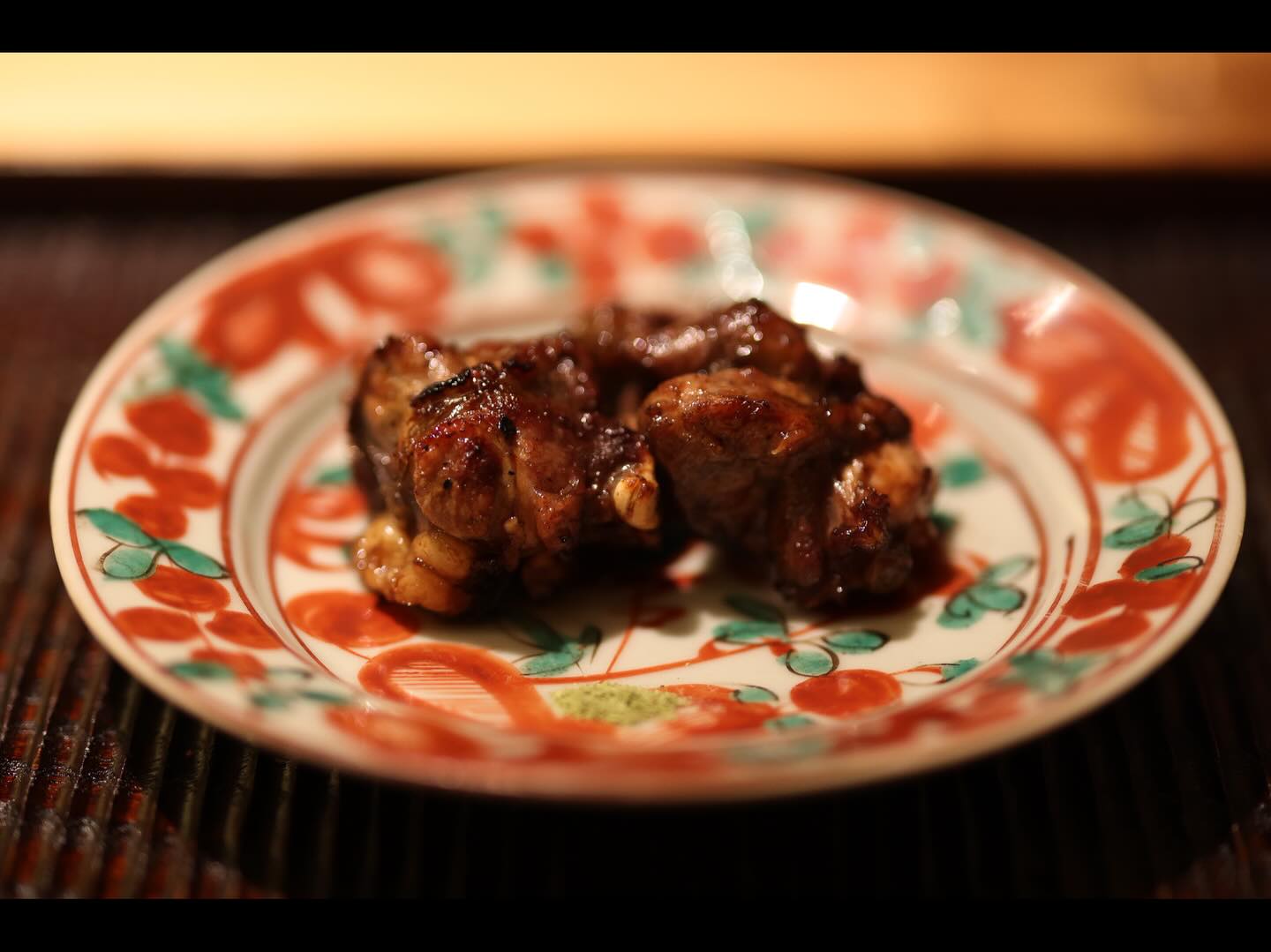
南京赤絵。
明時代末期から清時代初期にかけて、
景徳鎮の民窯で焼かれた五彩磁器。
その名は、明王朝の都が南京にあったことに由来し、
海を越えて日本にもたらされた色絵磁器を
包括的に指す呼称として定着しました。
欧州向けには壺や大徳利といった大作が多く、
一方、日本には食器や茶道具として渡りました。
線は均一ではなく、
どこか即興的で、のびやか。
けれど器としての均衡は崩れない。
異国で生まれた磁器が、
日本の食文化の中で静かに居場所を得たこと。
それは、料理を受け止める力があったからこそだと思います。
四百年を経た今も、
自然に料理と向き合う器として、
そこにあります。
Nankin Akae.
Polychrome porcelain fired in the kilns of Jingdezhen
during the late Ming to early Qing period.
Its name derives from Nanjing,
the former capital of the Ming dynasty,
and became a broad term in Japan
for imported overglaze-decorated wares from China.
While larger pieces such as jars and ewers were often made for Europe,
many vessels destined for Japan took the form of tableware
and utensils for tea.
The lines are not perfectly uniform—
there is a sense of freedom, almost improvisation.
Yet the balance of the vessel remains intact.
Porcelain born in a foreign land
found a quiet place within Japanese food culture.
It is, perhaps, because it possesses
the depth to receive cuisine.
Even after four centuries,
it stands naturally
as a vessel meant to face food itself.
#豪龍久保
#日本料理
#南京赤絵
#明末期
#梶古美術
明時代末期から清時代初期にかけて、
景徳鎮の民窯で焼かれた五彩磁器。
その名は、明王朝の都が南京にあったことに由来し、
海を越えて日本にもたらされた色絵磁器を
包括的に指す呼称として定着しました。
欧州向けには壺や大徳利といった大作が多く、
一方、日本には食器や茶道具として渡りました。
線は均一ではなく、
どこか即興的で、のびやか。
けれど器としての均衡は崩れない。
異国で生まれた磁器が、
日本の食文化の中で静かに居場所を得たこと。
それは、料理を受け止める力があったからこそだと思います。
四百年を経た今も、
自然に料理と向き合う器として、
そこにあります。
Nankin Akae.
Polychrome porcelain fired in the kilns of Jingdezhen
during the late Ming to early Qing period.
Its name derives from Nanjing,
the former capital of the Ming dynasty,
and became a broad term in Japan
for imported overglaze-decorated wares from China.
While larger pieces such as jars and ewers were often made for Europe,
many vessels destined for Japan took the form of tableware
and utensils for tea.
The lines are not perfectly uniform—
there is a sense of freedom, almost improvisation.
Yet the balance of the vessel remains intact.
Porcelain born in a foreign land
found a quiet place within Japanese food culture.
It is, perhaps, because it possesses
the depth to receive cuisine.
Even after four centuries,
it stands naturally
as a vessel meant to face food itself.
#豪龍久保
#日本料理
#南京赤絵
#明末期
#梶古美術