
-
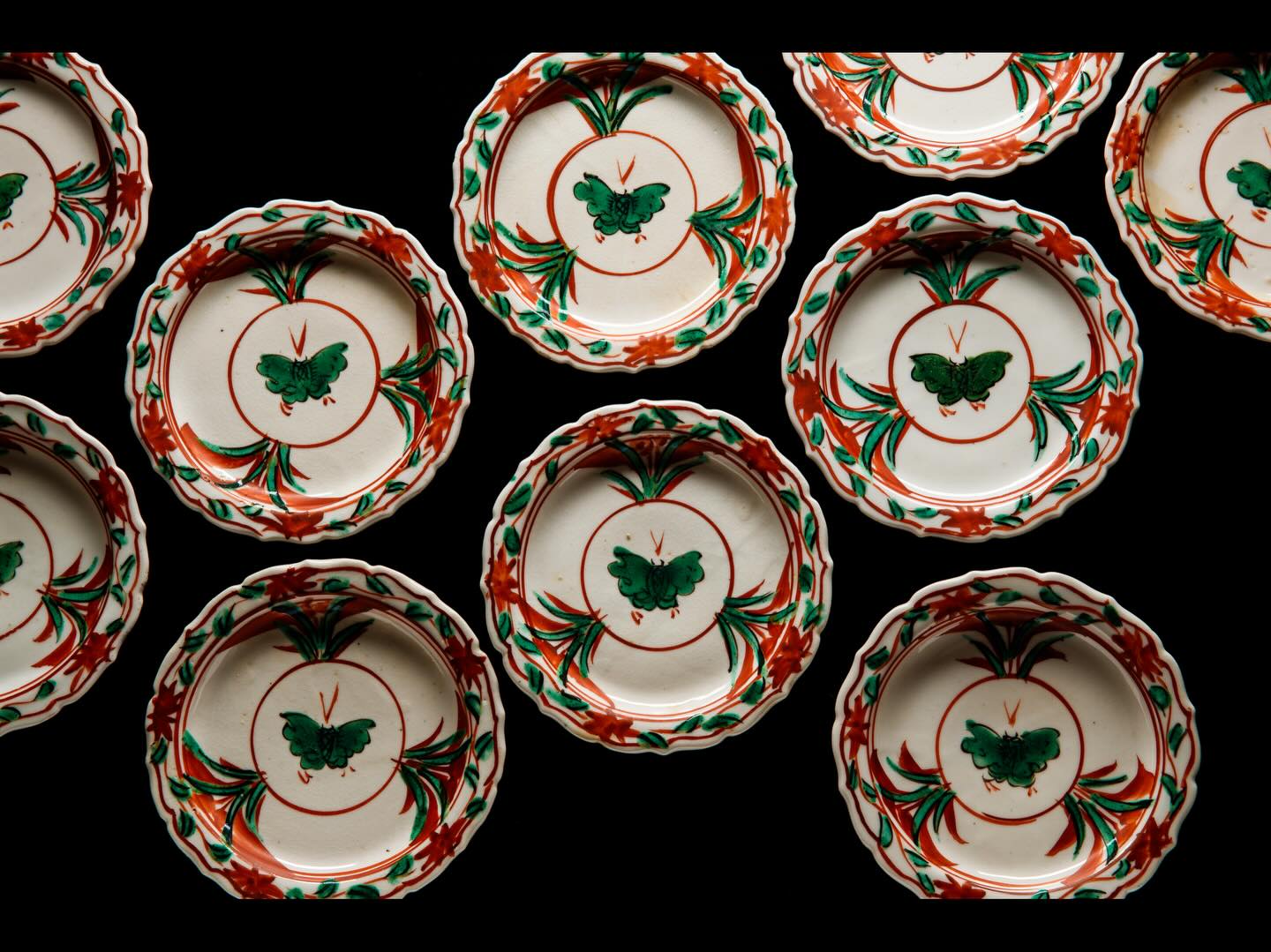 南京赤絵。
南京赤絵。
明末清初、景徳鎮で焼かれた五彩磁器は、
海を渡り、日本の食文化の中に根を下ろしました。
朱と緑の鮮烈な対比。
自由でありながら均衡を失わない構図。
その様式はやがて、
永楽保全、和全、妙全、
そして川瀬竹春など、
数多くの陶工によって写されていきます。
写しとは、
形をなぞることではなく、
意匠の核を掴むこと。
本家が持つ緊張と遊び。
装飾と余白の呼吸。
時代を越えて継承される赤絵の美は、
いまも料理と響き合います。
器は過去の遺物ではなく、
いまも景色を生み出す存在です。
Nanking ware.
Produced in Jingdezhen
during the late Ming to early Qing period,
these vibrant polychrome porcelains crossed the sea
and became rooted in Japanese dining culture.
The striking contrast of vermilion and green.
A composition that feels free, yet perfectly balanced.
Its style was later reinterpreted
by many Japanese masters —
Eiraku Hozen, Wazen, Myozen,
as well as Kawase Chikushun, among others.
To create a “copy”
is not to imitate form,
but to grasp the core of its design.
The tension and playfulness of the original.
The rhythm between ornament and space.
The beauty of red enamel
continues to resonate with cuisine today.
#豪龍久保
#日本料理
#南京赤絵
#川瀬竹春
#永楽善五郎