
「違いを焼くことは、自分を更新することでもある」
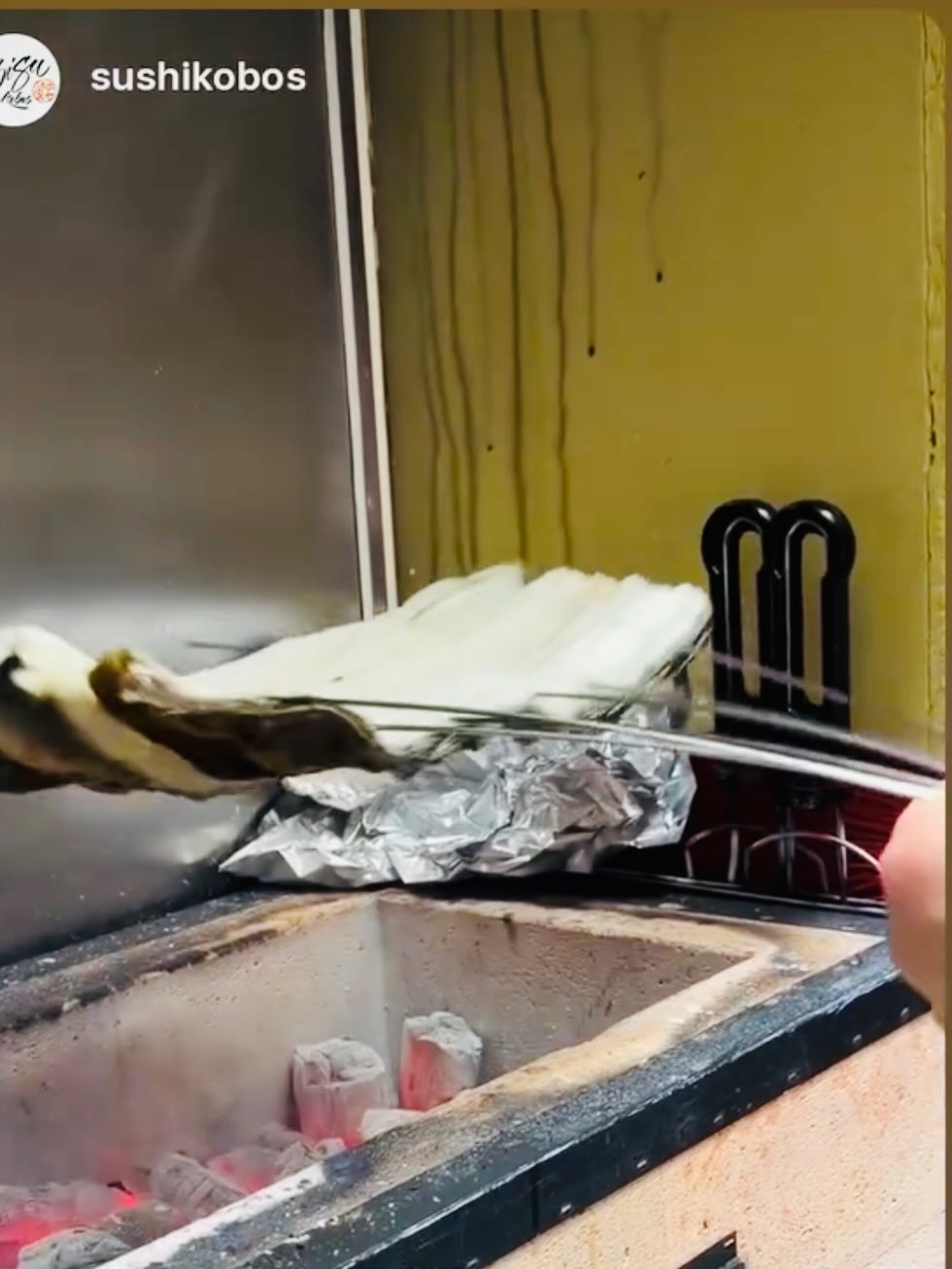
「違いを焼くことは、自分を更新することでもある」
先週携わらせていただいた
恵比寿えんどうさん × Ebisu by Kobos のイベント。
その場で、
ニホンウナギとヨーロッパウナギを
同時に炭火で焼く機会をいただいた。
ヨーロッパウナギは、
スペインで視察した養殖個体。
もう一種は、
普段扱い慣れているタイプの個体。
種が違えば、
骨格も、皮の厚みも、脂の質も違う。
同じ“うなぎ”でも、
炭の入り方はまるで別物だった。
さらに今回は、日本とは異なる環境。
空気、湿度、炉の造り、そして炭。
普段使い慣れている備長炭とは性格も違い、
火の立ち上がりや安定感も微妙に変わる。
脂の落ち方。
皮目の張り。
返す一瞬の判断。
同じ火加減では成立しない。
難易度は高かった。
しかしその分、確かな学びがあった。
スペインで見た養殖現場。
水温、循環、密度管理。
そして天然ウナギの一夜干しが揺れる水辺。
種を知り、水を知り、環境を知る。
料理は火の前に立つ前から始まっている。
違いを焼くことは、自分を更新することでもある。
その更新は、次の一皿に静かに反映される。
“Grilling the difference is also a way of renewing oneself.”
Last week, I had the opportunity to take part in an event hosted by
Ebisu Endo × Ebisu by Kobos in Madrid.
On that occasion,
I grilled Japanese eel and European eel side by side over charcoal.
The European eel was farm-raised—
the very kind I had studied during my visit to Spain.
The other was a type I am more accustomed to working with.
Different species mean different structures—
bone composition, skin thickness, fat quality.
Even though both are called “eel,”
they respond to fire in completely different ways.
This time, the environment was also different from Japan—
the air, humidity, grill structure, and the charcoal itself.
Unlike the binchotan I usually use,
the character of the fire—its rise and stability—was subtly different.
How the fat renders.
How the skin tightens.
The exact moment to turn.
The same heat does not produce the same result.
It was technically demanding,
yet deeply educational.
Observing eel farming facilities in Spain—
the management of water temperature, circulation, and density—
as well as seeing wild eel being air-dried by the water,
added further perspective.
To understand the species.
To understand the water.
To understand the environment.
Cooking begins long before standing in front of the fire.
Grilling the difference is also a way of renewing oneself.
That renewal will quietly be reflected in the next plate.
#豪龍久保
#日本料理
#恵比寿えんどう
#EbisubyKobos
#料理人の視点
先週携わらせていただいた
恵比寿えんどうさん × Ebisu by Kobos のイベント。
その場で、
ニホンウナギとヨーロッパウナギを
同時に炭火で焼く機会をいただいた。
ヨーロッパウナギは、
スペインで視察した養殖個体。
もう一種は、
普段扱い慣れているタイプの個体。
種が違えば、
骨格も、皮の厚みも、脂の質も違う。
同じ“うなぎ”でも、
炭の入り方はまるで別物だった。
さらに今回は、日本とは異なる環境。
空気、湿度、炉の造り、そして炭。
普段使い慣れている備長炭とは性格も違い、
火の立ち上がりや安定感も微妙に変わる。
脂の落ち方。
皮目の張り。
返す一瞬の判断。
同じ火加減では成立しない。
難易度は高かった。
しかしその分、確かな学びがあった。
スペインで見た養殖現場。
水温、循環、密度管理。
そして天然ウナギの一夜干しが揺れる水辺。
種を知り、水を知り、環境を知る。
料理は火の前に立つ前から始まっている。
違いを焼くことは、自分を更新することでもある。
その更新は、次の一皿に静かに反映される。
“Grilling the difference is also a way of renewing oneself.”
Last week, I had the opportunity to take part in an event hosted by
Ebisu Endo × Ebisu by Kobos in Madrid.
On that occasion,
I grilled Japanese eel and European eel side by side over charcoal.
The European eel was farm-raised—
the very kind I had studied during my visit to Spain.
The other was a type I am more accustomed to working with.
Different species mean different structures—
bone composition, skin thickness, fat quality.
Even though both are called “eel,”
they respond to fire in completely different ways.
This time, the environment was also different from Japan—
the air, humidity, grill structure, and the charcoal itself.
Unlike the binchotan I usually use,
the character of the fire—its rise and stability—was subtly different.
How the fat renders.
How the skin tightens.
The exact moment to turn.
The same heat does not produce the same result.
It was technically demanding,
yet deeply educational.
Observing eel farming facilities in Spain—
the management of water temperature, circulation, and density—
as well as seeing wild eel being air-dried by the water,
added further perspective.
To understand the species.
To understand the water.
To understand the environment.
Cooking begins long before standing in front of the fire.
Grilling the difference is also a way of renewing oneself.
That renewal will quietly be reflected in the next plate.
#豪龍久保
#日本料理
#恵比寿えんどう
#EbisubyKobos
#料理人の視点